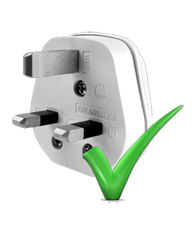
The applicable legislation namely Part 3 Section 81(Electricity) of the Safety Health and Welfare at Work General Application Regulations 2007 states that the Employer shall ensure that portable electrical equipment is periodically inspected and tested by a competent person. The legislation also states that the equipment should be certified as to whether it was safe and without risk to persons coming into contact with the equipment.
PAT testing is generally regarded as being the best way of meeting the electrical regulations that exist to protect employees, customers and tenants. Without it you could be in a very difficult situation if an electrical accident were to occur.
All portable electrical equipment is subject to getting damaged during use, and this damage could render the equipment dangerous to the user. Without a regular programme of testing and inspection, you have not taken reasonable steps to ensure the safety of users.
Tests and inspections should be made at reasonable and regular intervals, bearing in mind the rate of use of both portable and fixed appliances.
Failure to comply with the Electrical Regulations may constitute a criminal offence under the Consumer Protection Act 1987 which carries a maximum penalty on summary conviction Landlords and letting agents could also be sued in Civil Law under the duty of care for failure to ensure the tenants safety and as a result, face punitive damages.
PAT Testing for Bussiness
As a business, you have a duty to prevent any harm coming to your employees and customers. Portable appliance testing is one of the ways that you can comply with this obligation. Failure to implement a programme of regular appliance testing can also have insurance implications.
Insurance companies assume that when giving insurance cover to a business, the owners of that business are complying with all regulations necessary. An insurance company may reduce, delay or even refuse to pay on a claim for damage if an appliance that has not been tested has caused the damage.
The responsibility of employers
Electricity at work regulations 1989
Regulation 4 (2): 'As may be necessary to prevent danger all systems shall be maintained so as to prevent so far as is reasonably practicable such danger.'
To meet the requirements of the 1989 Electricity at work regulations, it is widely regarded to be necessary to implement a programme of planned inspection and testing of portable appliances.
In the Health & Safety at Work Act 1974, all employers have a legal duty to provide safe plant and equipment and every employer must ensure that equipment must be maintained in an efficient state, in efficient working order and good repair.
PAT Testing for Landlords
As a landlord, you have a duty to prevent harm to your tenants from electrical appliances that you supply. Portable appliance testing is widely regarded as being the best way of complying with this obligation. Without a programme of planned appliance testing and maintenance, you could be legally liable for damages resulting from your untested appliances. This covers all portable appliances that you supply, including fridges and freezers, microwave ovens, televisions and vacuum cleaners.
The regulations on electrical appliances for landlords and/or letting agents
The Electrical Equipment (Safety) Regulations 1994, mandatory since 1 January 1997 , state that all electrical appliances supplied with let accommodation must be safe. This applies to both new and second-hand appliances and covers all electrical items supplied for the intended use of the Tenant. The only sure method of ensuring that these appliances are safe is to have them tested by a trained competent person using the appropriate calibrated portable appliance testing equipment.
Portable appliance testing includes a thorough visual check of the appliance and a series of tests on professional PAT testing equipment.
The appliance or lead being tested is checked for a variety of faults, and given a pass or fail sticker as appropriate. A certificate of testing is also provided for the business showing the results of all tests. We will effect minor repairs at the time of testing (for example an incorrect fuse rating or damaged plug or IEC lead) in order that the equipment is safe to use and can be passed; more significant faults or damage will be reported to the manager.
The testing will involve switching items off if they are already on. To minimize disruption to staff and customers, the testing can be done out of hours in most circumstances - contact us for details.
All testing is carried out in accordance with The Institute of Electrical Engineers ' (IEE) code of practice, with full public liability insurance.



 Computers, monitors and peripherals requiring mains power